Published by Insure My Jewelry
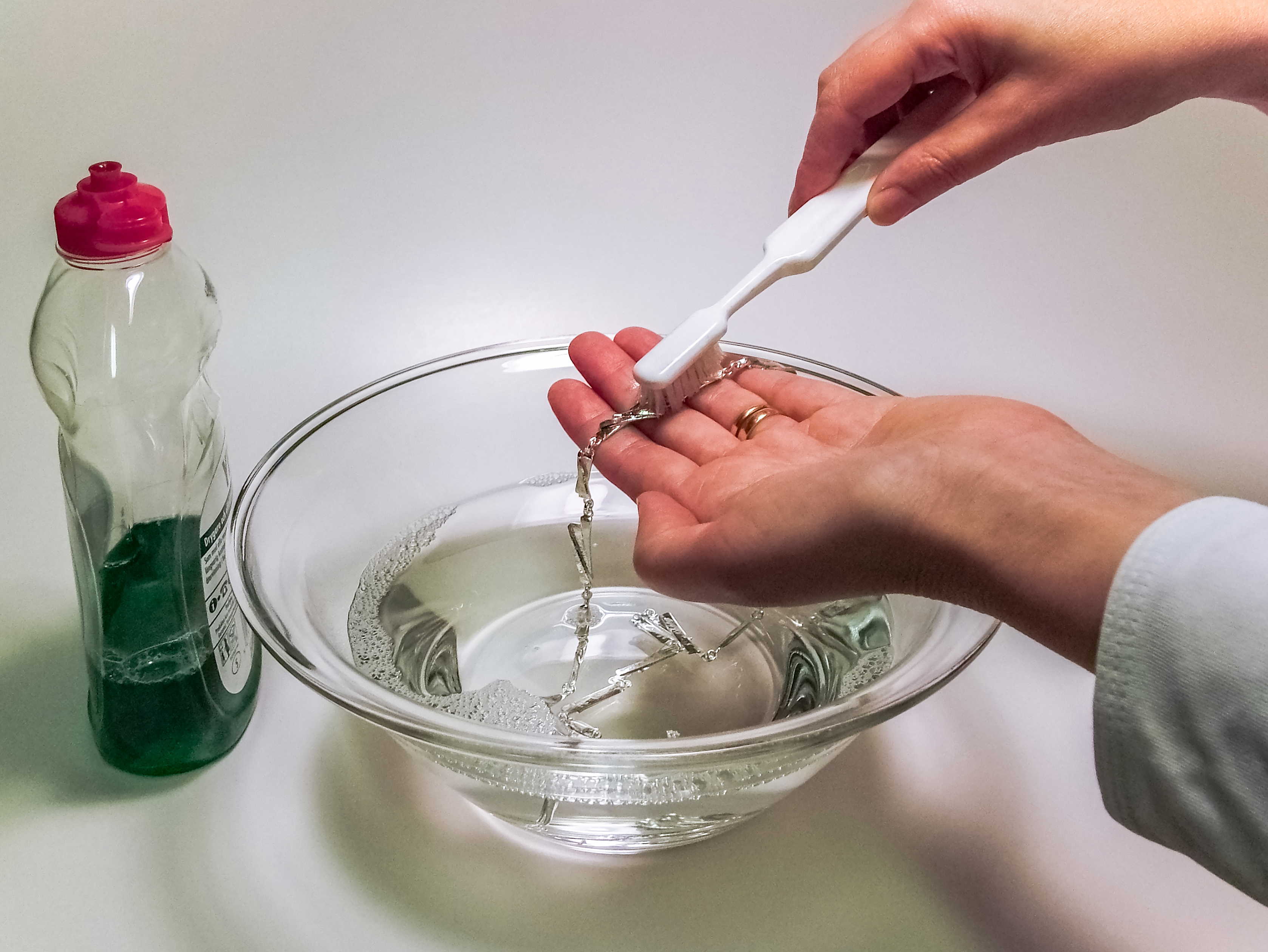
A cloudy ring can make you reach for the nearest cleaning hack. Pause before you do. The right method depends on the entire piece: its stones, treatments, metal, finish, and setting.
For many sturdy, water-safe pieces, mild dish soap and lukewarm water are a useful starting point. Pearls, treated gemstones, glued components, and fragile heirlooms need a different plan. If you cannot identify what you have, ask a jeweler before soaking it. The American Gem Society recommends identifying gemstones before choosing a cleaning method [1].
First, decide whether home cleaning makes sense
Gather the receipt, maker’s care instructions, and any gem report. Look for treatment disclosures and special finishes. “Gold ring” describes only part of the job if that ring also holds an emerald or pearl.
Then examine the piece in good light. A bent prong, visible gap around a stone, cracked surface, or clasp that no longer closes securely is a reason to stop. Do not wiggle a stone to test it. Set the piece aside for inspection.
Ask yourself three questions:
• Do I know the materials and any treatments?
• Does the maker allow the cleaning method I’m considering?
• Is the setting in sound condition?
If an answer is uncertain, a professional check is the practical next step. GIA explains that a jeweler can identify needed repairs before cleaning, including loose stones that need securing. Read GIA’s diamond-care guidance [2].
How to clean sturdy, water-safe jewelry
Use this method only when the piece’s materials, construction, and maker’s instructions allow it. Keep pearls, delicate or treated gems, glued pieces, and unassessed antiques out of this batch.
1. **Set up away from the drain.** Place two small bowls on a towel: one for cleaning and one for rinsing. Work with one piece at a time.
2. **Make a mild solution.** Add a drop or two of mild dish soap to lukewarm water. Avoid formulas containing bleach and abrasive additives. Follow any more specific instructions from the maker.
3. **Clean gently.** For a sound, compatible setting, use a clean, very soft jewelry brush with light pressure. Do not dig under prongs, force bristles into tight spaces, or scrape off stubborn deposits.
4. **Rinse in the second bowl.** Use clean water to remove residue. Check both bowls for anything that came loose before emptying them.
5. **Dry completely.** Pat with a soft, lint-free cloth, then let the piece air-dry before putting it away.
The AGS home-care guide [3] supports mild soap, gentle brushing, rinsing, and thorough drying. GIA specifically recommends rinsing in a glass rather than directly in a sink [4] to reduce the risk of losing jewelry or a stone.
Match the method to the jewelry
Diamonds
For an untreated diamond in a sturdy, compatible setting, mild dish soap and a soft brush can remove everyday buildup. Pay gentle attention to the back of the stone, where oils collect. A diamond’s hardness does not make its setting indestructible. Fracture-filled diamonds and fragile antique settings require extra care. GIA’s diamond-cleaning advice [2] explains these distinctions.
Rubies and sapphires
Treatment history matters. GIA recommends a damp cloth only for fracture-filled, cavity-filled, or dyed ruby and sapphire. Do not apply a general “hard gemstone” cleaning rule to those pieces. If the treatment is unknown, have a jeweler establish the right routine. See GIA’s guides for ruby [5] and sapphire [6].
Pearls
After wearing pearls, wipe them with a very soft, clean cloth. GIA permits occasional cleaning with warm, soapy water, but that is not permission to soak every pearl necklace or glued pearl setting. Have the jeweler explain the right method for the construction. Never use steam or an ultrasonic cleaner. If a strand becomes wet, let it dry flat and completely before wearing; damp thread can stretch. GIA’s pearl-care guide [7] covers routine wiping and drying, while its general care guide [4] addresses wet strands.
Emeralds
Many natural emeralds have fractures filled with oils or resins. Heat, chemicals, and ultrasonic vibration can compromise the stone or its filling. GIA identifies warm, soapy water with gentle cleaning as the safest method, but get piece-specific advice before trying it on an unfamiliar ring. Avoid steam and ultrasonic cleaning. GIA’s emerald-care guide [8].
Opals and turquoise
Opals need protection from heat and sudden temperature changes. GIA recommends warm, soapy water for opal, but an assembled opal doublet or triplet is a separate concern: its glued layers should not be immersed. Use a damp, soft cloth for these assembled pieces, following the maker’s instructions. If you do not know which type you own, ask first. GIA’s opal guide [9] and opal specialist Opals Down Under’s care instructions [10] explain the distinction.
For turquoise, GIA permits warm, soapy water but warns against steam and ultrasonic cleaners. Treated surfaces can be damaged by heat or solvents. Do not assume a cleaning dip is appropriate for every blue-green stone. GIA’s turquoise-care guide [11].
Silver, plated finishes, and mixed materials
Plain sterling silver may need a silver-specific cloth or cleaner for tarnish. Check compatibility with every stone and finish before using one. Deliberately darkened details can be removed by excessive cleaning or polishing, as Tiffany’s silver-care guidance explains [12].
Plated jewelry needs its maker’s instructions, too. A polishing cloth intended for solid metal may be inappropriate for plating. Pandora distinguishes the treated and untreated sides of its cloth [13] for precisely this reason. For enamel, adhesives, mixed materials, or unknown finishes, confirm care before applying liquid or polish.
Skip the aggressive cleaning hacks
Toothpaste and abrasive household powders can scratch jewelry metals. Chlorine bleach can damage some gold alloys. Neither belongs in a general jewelry-cleaning routine. GIA warns against both [2].
An ultrasonic machine is also not a universal shortcut. Vibration can loosen stones, and some gems and treatments cannot tolerate it. Leave the decision about ultrasonic or steam cleaning to a professional who has examined the piece. GIA’s ultrasonic cautions [4] apply even when a machine is sold for home use.
When to book a professional cleaning
Get help before cleaning if a stone moves, a prong catches or looks damaged, the piece has a crack, or you do not know its materials. Heirlooms with delicate construction deserve an assessment before brushing or soaking.
A useful appointment covers more than sparkle. Ask the jeweler to inspect the setting, identify any treatment-related limits, explain your home-care method, and recommend an inspection schedule for how you wear the piece. Regular professional inspections complement home care. AGS recommends both [3].
Frequently asked questions
Can I clean every piece in the same bowl?
No. Sort by materials and care requirements first, then clean suitable pieces individually. A method that suits one ring may be wrong for another.
How often should I clean jewelry?
There is no single schedule for a whole collection. Wear, construction, and materials all matter. Ask your jeweler for a routine and inspection interval for each frequently worn piece.
What if my ring still looks cloudy?
Stop rather than increasing heat, chemical strength, or scrubbing pressure. A jeweler can assess whether the appearance comes from removable buildup or a condition that cleaning will not solve.
Is a soft cloth always safe?
Use a clean, plain, soft cloth for gentle wiping when appropriate. A chemically treated polishing cloth is a different product; check that it is suitable for the piece.
The best home-cleaning routine starts with knowing what you own. A little care, matched to the actual piece, makes it easier to enjoy your jewelry with confidence.
For the habits between cleanings, see our guide to caring for your jewelry collection [14].
Request a jewelry insurance quote
Thinking about coverage for the pieces you care for? Request a quote [15]. If you authorize the referral, APS can pass your inquiry to a licensed insurance agent for follow-up by a licensed agent. An inquiry does not bind coverage or guarantee a quote.
AI-assisted educational content. Confirm specific coverage with your licensed agent.
How to insure jewelry: the practical guide← Return to the journal · Browse the archive