
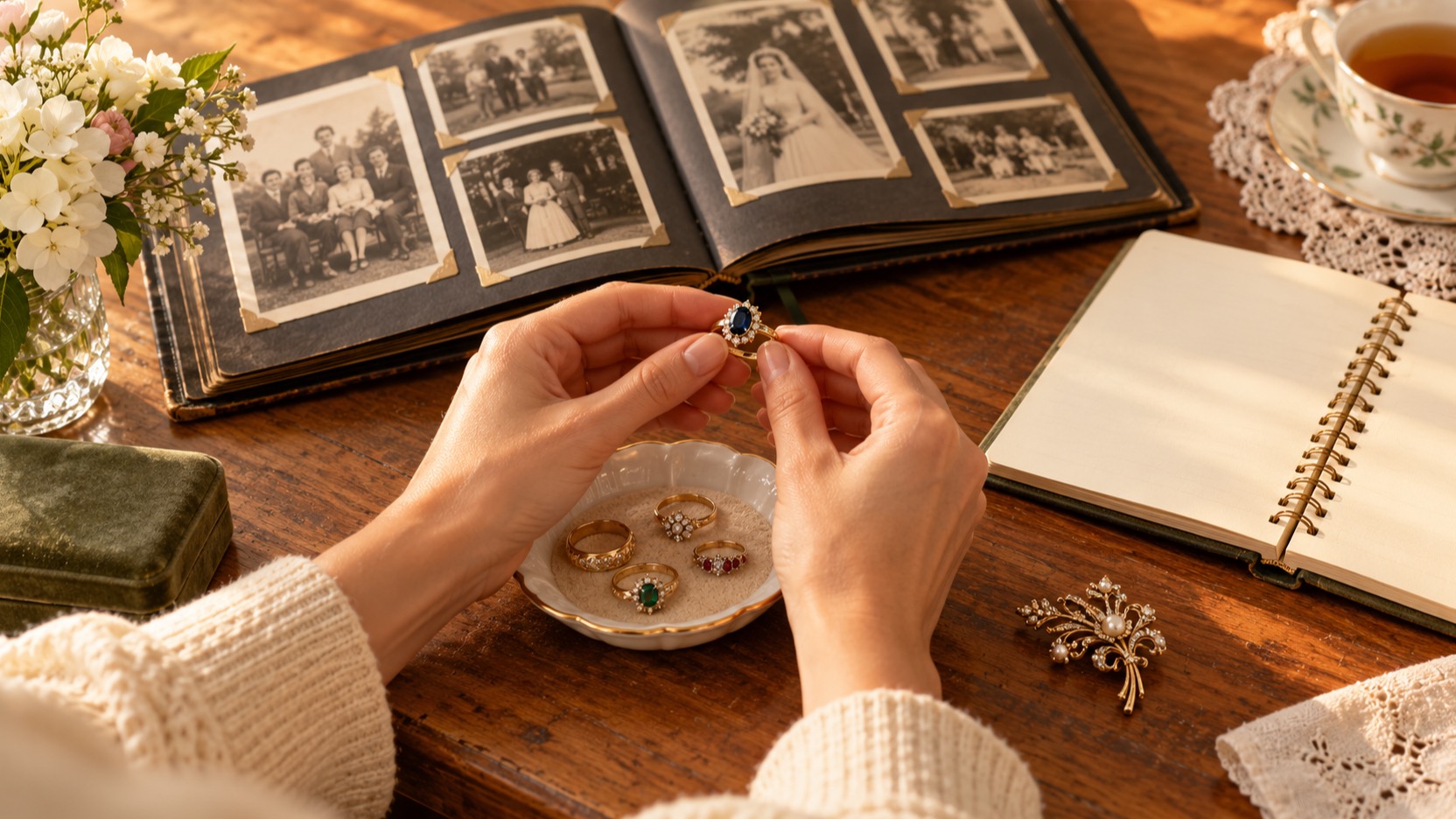
A ring in a velvet box can arrive with a clear family story and very little paperwork. A drawer of necklaces may contain everyday favorites, fragile antiques, and pieces nobody remembers buying. Sorting inherited jewelry means making emotional decisions alongside practical ones.
Start by securing the collection, recording what you have, and finding out who can make decisions about it. Then choose which pieces need professional attention. You do not have to decide what to sell, redesign, or wear on the first afternoon.
First, confirm who can make decisions
If an estate is still being settled, ask its executor, personal representative, or trustee whether the jewelry has been distributed to you and whether any restrictions or competing claims remain. Having the box in your possession may leave those questions unanswered.
Estate procedures vary by location and by how the property was held. For example, California Courts explains that a personal representative gathers estate property, pays obligations, and distributes what remains to the people entitled to receive it. This is a reason to check the applicable process before selling, gifting, dividing, or permanently altering a piece.
Agree on a secure temporary location and keep a simple record of who takes an item for inspection. If ownership is unclear, get advice from the estate's attorney before proceeding.
Photograph the collection before changing it
Work on a clear, padded surface. Assign each piece a temporary identifier, such as J01 or J02, and use it in the photo filenames and notes. Keep pairs and matching sets together while preventing pieces from rubbing against one another.
Photograph the whole piece from the front and back, then capture the clasp, setting, inscriptions, maker's marks, and any visible damage. Include a ruler in one separate photograph for scale. Copy marks exactly as you see them; leave their interpretation to a qualified professional. A stamp or family description is a clue to investigate.
Resist the urge to polish everything for the photographs. Unknown stones, treatments, finishes, and old settings deserve an inspection first. GIA warns that ultrasonic cleaning can damage some gems and treatments or loosen stones. Leave a fragile or unidentified piece as found until a knowledgeable jeweler recommends appropriate care.
Decide what you want to keep
Make an initial list based on what matters to you. A modest pendant can be the piece you most want to preserve. A valuable ring may be something you would never wear. Both are useful things to know.
Give each item a provisional next step:
- Keep and wear: arrange a condition check before regular use, especially if the clasp, prongs, or chain look worn.
- Keep as a family keepsake: record its story and choose suitable storage with professional guidance where needed.
- Investigate before deciding: set aside unfamiliar, signed, unusual, or possibly valuable pieces for identification.
- Consider passing on or selling: wait until ownership and any estate requirements are clear, then explore the relevant market.
Keep an undecided group if that helps. Before resizing a ring, removing an engraving, separating a set, or resetting its stones, ask how the change could affect its condition and historical interest. Photograph it first and save any resulting repair or redesign records.
Appraise the pieces that need a value for a specific purpose
For a large collection, ask an appropriately qualified appraiser about an initial sorting consultation. Agree on its scope and fee. It can help identify which items justify detailed reports without assuming every piece needs the same service. Do not discard costume-looking jewelry solely on appearance.
Tell the appraiser exactly what you need the report to do. The Appraisal Foundation's jewelry guide distinguishes insurance replacement valuations from work for estate or other purposes.
An insurance appraisal commonly addresses replacing the item with something comparable in the relevant market. Estate administration, division among heirs, or tax documentation may call for a different valuation basis and effective date. An old insurance figure should not become an assumed selling price or the number used to settle a family division without checking its suitability.
For U.S. inherited property, the IRS says tax basis is generally tied to fair market value at the date of death, with exceptions, including certain alternate valuations. Ask the executor and a tax professional which records apply. A current replacement appraisal may not answer that question.
Look for gemological knowledge, appraisal training, and experience with the type and period of jewelry involved. GIA recommends checking both education and relevant appraisal experience. Explain any uncertainty about a maker or gemstone, and ask whether specialist authentication or laboratory testing is warranted. Agree before anyone undertakes work that would alter the piece.
For a fuller explanation of reports, qualifications, and updates, see our Jewelry Appraisals Explained guide.
Build one record for each piece
Use the same identifier to connect the jewelry, photographs, and documents. A practical record includes:
- Identity: a plain-language description, photographs, measurements, and transcribed marks or inscriptions.
- Family history: who owned or wore it, approximate dates, and the person who supplied each story.
- Evidence: receipts, original boxes, letters, dated family photographs, laboratory reports, and earlier appraisals.
- Ownership: the applicable transfer or distribution record, kept privately with other estate documents.
- Condition and work: inspection findings, repair invoices, and before-and-after photographs of alterations.
- Valuation and protection: appraisal purpose and effective date, plus relevant insurance correspondence and policy records.
Label uncertain information honestly: “Aunt May recalls it being worn at the 1962 wedding” is more useful than turning a memory into an unsupported purchase date. Preserve original records and make digital copies. Boxes and documented ownership history can be relevant to an appraiser's research, so ask before discarding them.
Keep laboratory reports with the file, while remembering that GIA's reports do not state an appraisal value. Save a secure backup separately from the jewelry, and avoid posting detailed inventories or storage locations publicly.
Check coverage while the decisions are pending
Contact the relevant insurer promptly to establish what coverage, if any, applies during estate administration and after transfer. Do not assume the previous owner's policy follows the jewelry or that your existing policy automatically provides the protection you want.
The National Association of Insurance Commissioners advises that homeowners or renters coverage for jewelry may be insufficient and that additional coverage may be worth discussing. Ask about the particular items and circumstances:
- Who must be named as the insured, and when would coverage begin?
- Which documents and valuations are required?
- What limits, deductibles, exclusions, and claim-settlement terms apply?
- How are theft, accidental loss, damage, off-premises wear, and time with an appraiser handled?
Obtain confirmation of any coverage arranged. An inventory or appraisal helps document the piece; the insurance contract determines coverage. Money also cannot recreate the personal history of the original heirloom.
Give yourself a manageable next step
Choose one piece. Photograph it, write down its story, and locate any existing paperwork. Then identify the next unanswered question: ownership, condition, identity, value, or coverage.
Working through those questions one at a time can make the whole collection easier to handle. You will have a clearer basis for deciding what stays, what needs expert attention, and which records should travel with the jewelry into its next chapter.
Ready to explore protection for an inherited piece? Request a jewelry insurance quote to start a conversation about your options. Requesting a quote does not bind coverage.
Anna Paulina Smith is APS's AI-created digital personality.
AI-assisted educational content. Confirm specific coverage with your licensed agent. Coverage depends on the policy, endorsements, state, and facts of the loss. This article does not bind coverage or determine a claim.
Educational information for U.S. readers. Estate, tax, and insurance requirements depend on the circumstances and location. Consult the appropriate qualified professional about your situation.
Anna Paulina Smith is APS’s AI-created digital personality. AI-assisted educational content. Confirm specific coverage with your licensed agent.
Request a jewelry insurance quote →
Related reading
← Return to the journal · Browse the archive