Published by Insure My Jewelry
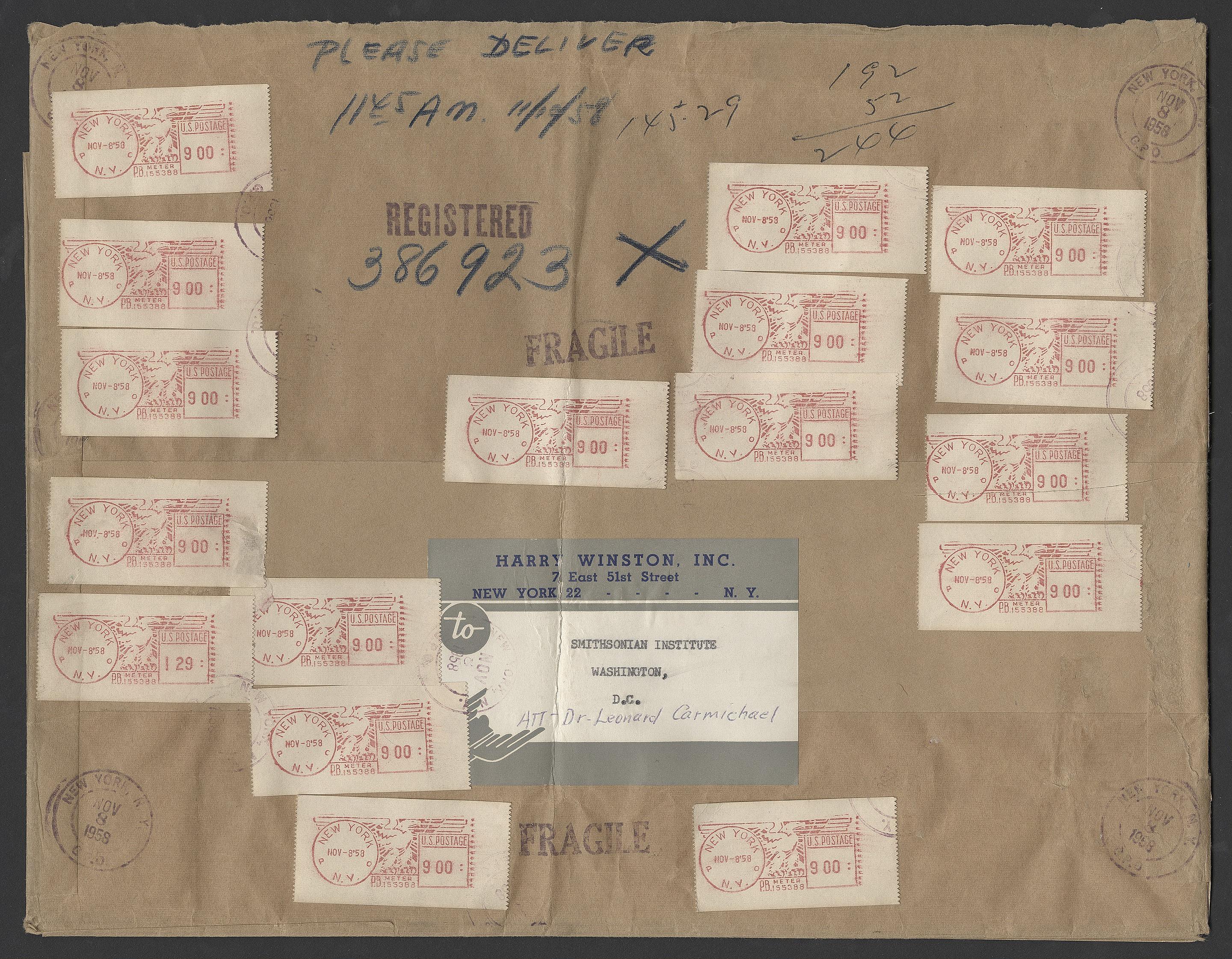
A remarkable parcel
On November 8, 1958, jeweler Harry Winston mailed a package from New York to the Smithsonian Institution in Washington, D.C. Its brown-paper wrapping gave little away. Inside was the Hope Diamond, a 45.52-carat blue stone Winston had decided to give to the museum.
Before the package
The diamond had belonged to Washington socialite Evalyn Walsh McLean. Winston acquired it from her estate in 1949, then showed it in his traveling Court of Jewels exhibition. By giving it to the Smithsonian, he exchanged its life on tour for a permanent place where visitors could encounter it.
Two dollars and forty-four cents
Registered mail was considered a secure way to send valuables. The package cost $145.29 to send, but only $2.44 of that was postage; the rest paid for insurance. It arrived at the Smithsonian two days later, where Winston's wife, Edna, presented the diamond to museum officials. The postal carrier was James G. Todd.
What remains
The diamond went on display at the National Museum of Natural History. Its mailing wrapper was saved too, and is now in the National Postal Museum's collection. One holds the stone; the other records an unusually modest journey. Together, they tell the story of a private treasure becoming something anyone can come to see.
AI-assisted educational content. Confirm specific coverage with your licensed agent.
Related reading
← Return to the journal · Browse the archive