Published by Insure My Jewelry
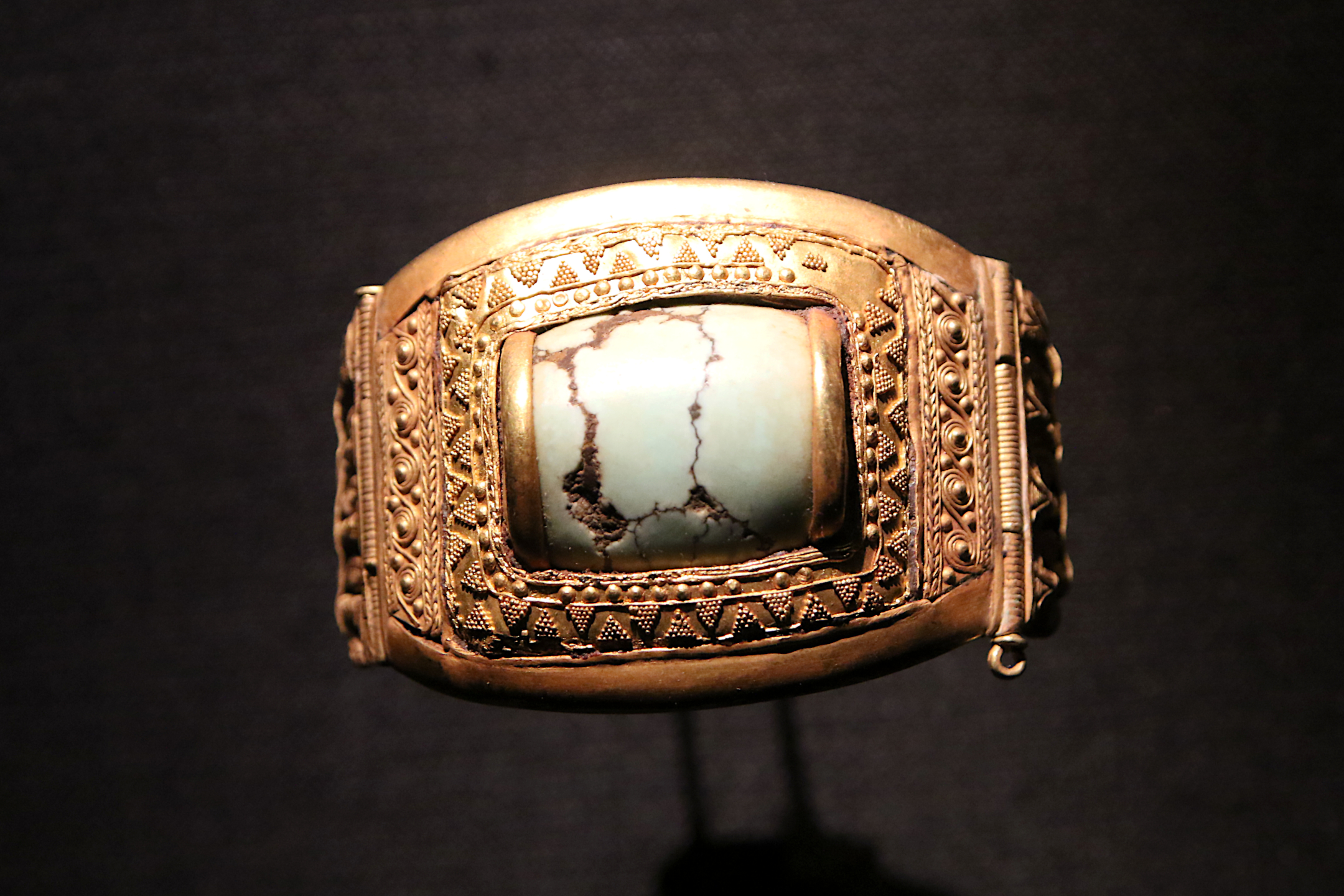
Found where it was worn
When Howard Carter's team examined Tutankhamun's burial in the 1925–26 season, they recorded several bracelets on the king's forearms. One, catalogued as 256.rr, lay on the right forearm, fifth from the elbow. It was not a jewel found loose in a box; its position was part of the discovery.
The maker's close work
Carter described light and dark gold, electrum, a front plaque joined to the back by tiny hinges and pins, and lotus buds along the sides. At its center sat a pale, barrel-shaped material. Even the excavation notes could not settle exactly what it was. Carter wondered whether it came from a crocodile; conservator Alfred Lucas later questioned whether it was stone at all.
What the records keep
The bracelet's surviving record gives us more than a photograph of gold. It tells us where the piece lay, how it fastened, what its makers shaped, and which details still resist a confident answer. A century after the tomb's discovery, that combination of craft and unanswered questions remains more compelling than calling it treasure and stopping there.
AI-assisted educational content. Confirm specific coverage with your licensed agent.
Related reading
← Return to the journal · Browse the archive